



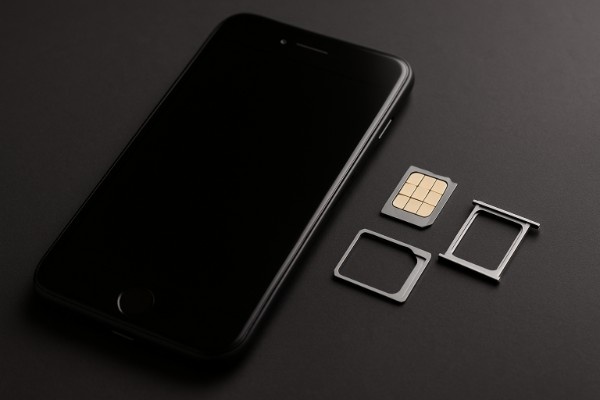
In our hyper-connected world, mobile communication is a cornerstone of daily life. At the heart of this connectivity lies GSM (Global System for Mobile Communications), a pivotal technology that revolutionized mobile telephony. This comprehensive guide delves into the intricacies of GSM, exploring its origins, architecture, functionalities, and its enduring impact on global communication.
Introduction to GSM
GSM, or Global System for Mobile Communications, is a standard developed to describe protocols for second-generation (2G) digital cellular networks. It was first deployed in Finland in December 1991 and quickly became the most widely adopted mobile communication standard globally. GSM’s primary objective was to ensure interoperability and seamless communication across different countries and networks.
Evolution of Mobile Communication Leading to GSM
Before GSM, mobile communication was primarily analog, with various incompatible systems across countries. The need for a unified, digital system led to the development of GSM by the European Telecommunications Standards Institute (ETSI). GSM introduced several innovations:
- Digital Signal Transmission: Enhanced voice quality and system capacity.
- International Roaming: Enabled users to access mobile services across different countries.
- SIM Cards: Introduced Subscriber Identity Modules for user authentication and portability.
Understanding GSM Architecture
GSM architecture is a complex system designed to manage mobile communication efficiently. It comprises several subsystems:
1. Mobile Station (MS)
The user’s mobile device, including the handset and SIM card.
2. Base Station Subsystem (BSS)
- Base Transceiver Station (BTS): Handles radio communication with the MS.
- Base Station Controller (BSC): Manages multiple BTSs, handling resource allocation and handovers.
3. Network Switching Subsystem (NSS)
- Mobile Switching Center (MSC): Central component that performs call routing and mobility management.
- Home Location Register (HLR): Database storing subscriber information.
- Visitor Location Register (VLR): Temporarily stores information about subscribers currently in the MSC’s area.
- Authentication Center (AUC): Provides security by authenticating users.
- Equipment Identity Register (EIR): Database containing information about valid mobile equipment.
4. Operation and Support Subsystem (OSS)
Provides network operators with tools for monitoring and managing the network.
How GSM Works
GSM operates by dividing the coverage area into cells, each served by a BTS. Here’s a simplified overview of the process:
- Call Initiation: When a user makes a call, the MS sends a request to the nearest BTS.
- Signal Routing: The BTS forwards the request to the BSC, which then passes it to the MSC.
- Authentication: The MSC consults the HLR and AUC to authenticate the user.
- Call Setup: Once authenticated, the MSC sets up the call path to the recipient.
- Handover: If the user moves between cells during the call, the BSC manages the handover to maintain call continuity.
Key Features of GSM
- Time Division Multiple Access (TDMA): Divides frequency bands into time slots, allowing multiple users to share the same frequency.
- International Roaming: Enables users to access services in different countries.
- Short Message Service (SMS): Allows sending and receiving text messages.
- Enhanced Security: Provides encryption and authentication mechanisms.
- SIM Cards: Facilitate user identity and portability across devices.
GSM Frequency Bands
GSM operates on various frequency bands, depending on the region:
- GSM 900: Used in Europe, Asia, and Africa.
- GSM 1800: Also prevalent in Europe and Asia.
- GSM 1900: Common in North America.
- GSM 850: Used in parts of the Americas.
These frequency bands ensure wide coverage and compatibility across different regions.
Advantages of GSM
- Global Standardization: Ensures compatibility and interoperability worldwide.
- Enhanced Voice Quality: Digital transmission reduces noise and interference.
- Efficient Spectrum Utilization: TDMA allows multiple users to share the same frequency.
- Security Features: Provides user authentication and data encryption.
- Cost-Effective: Economies of scale reduce equipment and service costs.
Limitations of GSM
- Data Transmission Speed: Limited bandwidth compared to newer technologies.
- Signal Interference: Potential for interference in densely populated areas.
- Limited Support for High-Speed Data: Not optimized for modern data-intensive applications.
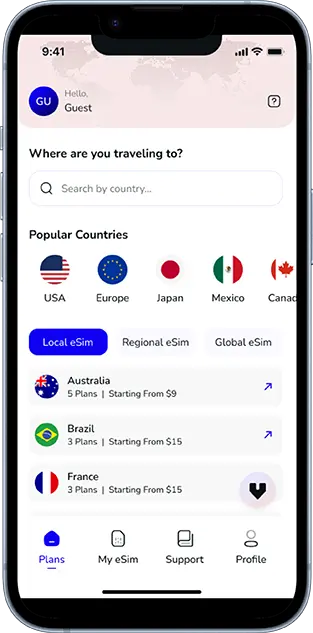
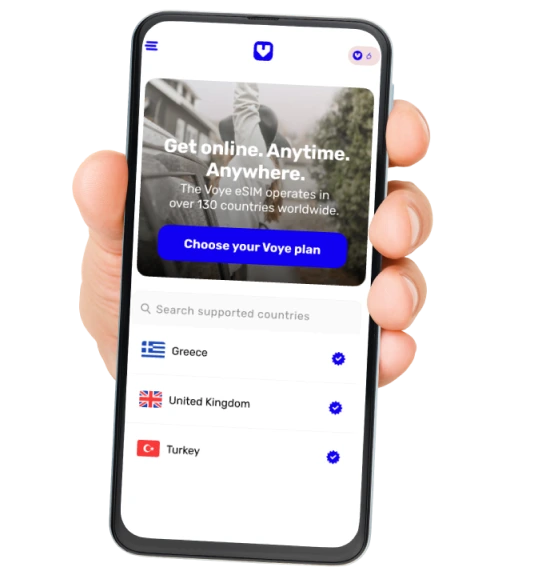
Global Coverage, Local Rates
Experience hassle-free connectivity wherever you go.
Seamless Mobile Data Everywhere













 English